The Importance of Throttle Application & Throttle Velocity In the graph, there are four traces: Speed, Throttle (Gas Pedal Position), Throttle Velocity, and Delta Time (lap delta). The blue is generated by a professional race driver; the red by an amateur. The car and track are the same (a left-hand corner quickly followed by a […]
Why Racecar Brakes are Difficult to Master I don’t know about everyone else reading this, but when I went through my first racing school, there was a lot of focus on race car braking much later than I thought was possible. This is because race cars brake really well and with only street driving under […]
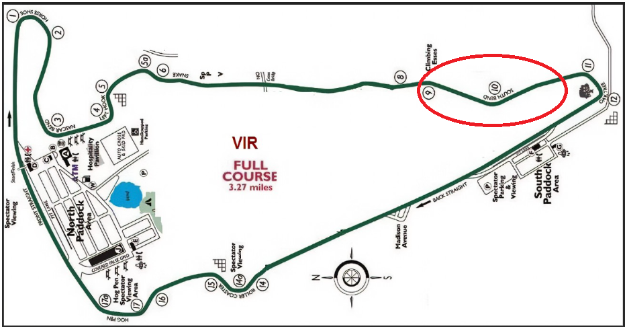
Racing Corners and Why They Should be a Priority In order to get the fastest lap time, you need to figure out what racing corners are more important than others. This is especially true if one corner directly leads into another corner. The SCCA Runoffs were held last fall at Virginia International Raceway (VIR) and […]
Driving Fast: Is Coasting Bad? I have heard many times that the driver should either be on the throttle or the brake and they should never be coasting (no throttle and no brake). But is coasting always bad? After looking at pro race car driver data or simply data of really quick drivers, I have […]
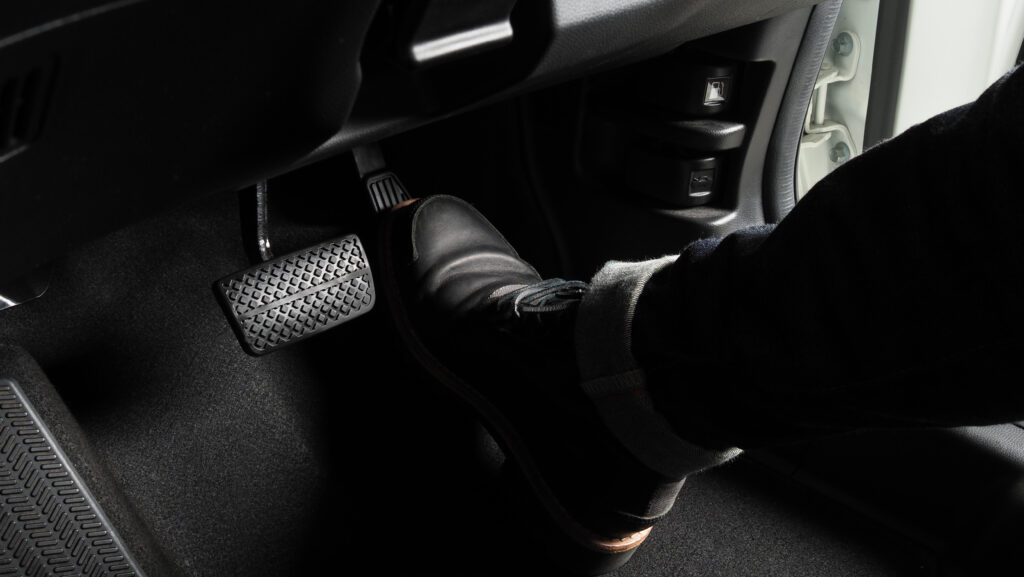
For driver development, the throttle, brake, and steering data traces are extremely important to look at in the data. The traces themselves provide a lot of information but I’m also going to highlight different ways of looking at the data as well as some math channels that can help us understand what is happening as well. For this article, I’m just going to focus on one data channel – the throttle pedal.
Speed is in mph and lateral acceleration is in g’s. Multiplying the speed (mph) by 1.46667 gets the speed in ft/s and multiplying the lateral g’s by 32.17405 gets the g forces in ft/s2. The radius of the corner then ends up being in ft. It is amazing how accurate this formula can be. In Exhibit 1 I used Google Earth to look at turn one at VIR and I drew a circle that has a radius of 122 ft.