
Engineering for Race Teams
I hope everyone’s 2026 is shaping up to be a good one! It certainly looks like my 2026 is going to be busy. At the end of 2025, I was brought into the Risi Competizione team as their Performance Engineer. They run a Ferrari 296 GT3 EVO in GTD Pro and will be running in the five IMSA endurance races in IMSA. Unfortunately, we were involved in an incident in the 2nd hour of the 24 hours of Daytona and weren’t able to continue but I still learned a lot and I look forward to supporting them at the 12 hours of Sebring in March.

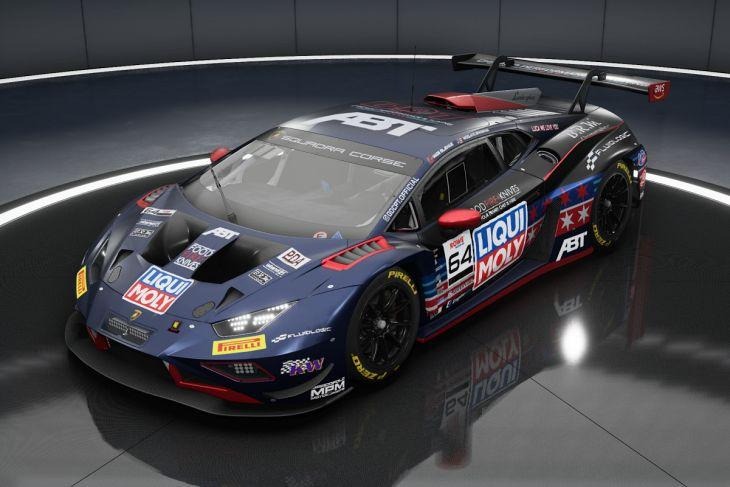
Something else that is exciting for me is that I’m also going to be the Performance Engineer for Chicago Performance and Tuning (CPT) who will be running a Lamborghini Huracan GT3 EVO2 in the SRO GT World Challenge America series. The first event for them will be at Sonoma the week after the 12 hours of Sebring so I will be busy in March!
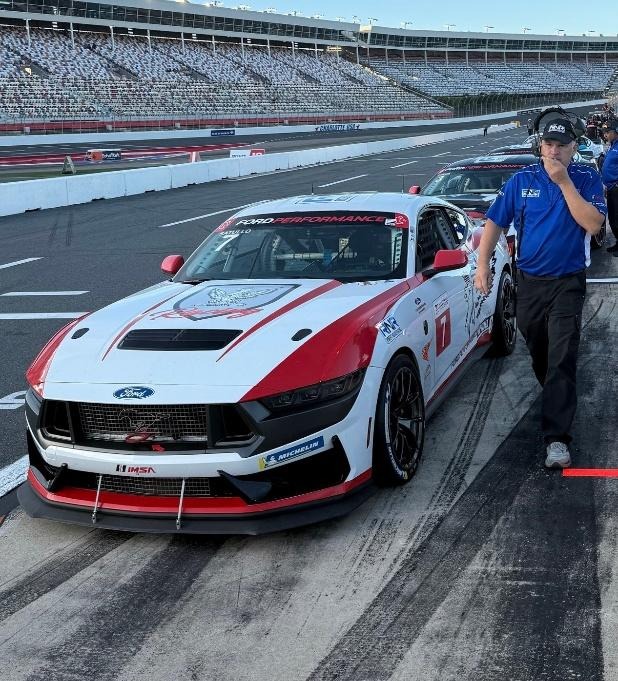
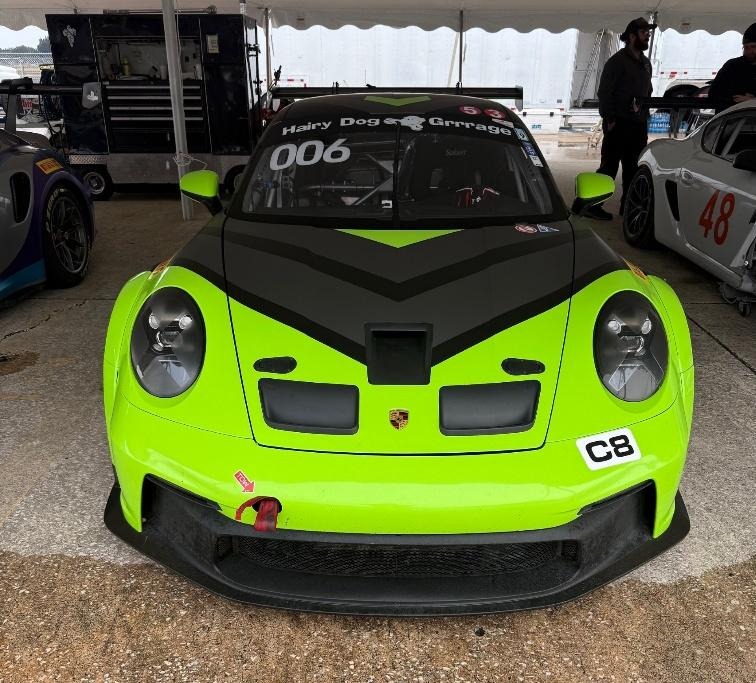
In addition, I will be supporting the Robert Noaker Racing team in Mustang Challenge and the Porsche drivers under the Hairy Dog Grrrage tent. I just wish I could be everywhere at once!
I recently co-hosted an AIM Learn Fast video with Roger Cadell, AIM’s National Training Manager and talked about my experience at Daytona as well as some of the things that I look for in data – kind of a big picture perspective. Here is the link to that video: 7-3 – Daytona 24hr Performance Engineering with Ray Phillips – 2/10/2026. But I also talk about some of the things that I mentioned in that webinar below.
Most racers today have access to very powerful data systems. But here’s the reality:
The software doesn’t make the car faster. The decisions do.
At Risi Competizione, there were three main engineers, the Race Engineer, the Performance Engineer, and the Data Engineer. Not all teams have these exact positions but no matter what positions they have, the roles need to be fulfilled – even if it is just one person wearing multiple hats.
The Race Engineer owns setup decisions and strategy. Works directly with the driver. Ultimately answers: What should we do next? The Performance Engineer (my role) analyzes the data and builds Key Performance Indicators (KPIs). He uses correlation to understand what is really limiting the lap time. Effectively, he is answering the question Why is the car behaving this way? The Data Engineer often handles electronics, logging, telemetry, fuel and energy monitoring. He ensures the data is accurate and reliable. He is answering the question Is the data correct, and are we operating within limits? If the data isn’t trustworthy, everything downstream becomes guesswork.
I know there is a lot of focus on lap time, but lap time only tells you what happened, it doesn’t tell you why it happened. It’s affected by tire state, fuel load, traffic, track evolution, and driver adaptation. If lap time is your only metric, you’re often reacting instead of engineering. That’s where KPIs come in. What makes a good KPI? A KPI (Key Performance Indicator) in racing is:
A repeatable metric that links driver behavior or car state to lap time.
Good KPIs are:
- Track-specific
- Corner-phase specific (Entry / Mid / Exit)
- Useful for making decisions
If a metric doesn’t guide a decision, it’s probably not a KPI.
In my opinion, the best way to determine a KPI is to use correlation. It doesn’t tell you what to change but it does tell you where to look first. For example, one thing that I consistently look at is the amount of understeer or oversteer the car has. Sometimes this understeer/oversteer is due to the setup on the car and sometimes it is caused by the driver. I calculate the understeer/oversteer values and separate the values based on the three phases of the corner (Entry / Mid / Exit). This helps me determine if the understeer/oversteer is setup related or driver related. Context matters! When you see a strong relationship between a KPI and lap time, ask:
- Is this driver-controlled or car-controlled?
- Is it repeatable?
- Is it one-corner specific or systemic?
Whenever a setup change is made, the engineers really never know what exactly what it is going to do. They have a hypothesis of what the change will do but in reality every setup change is an experiment. Every setup change should answer four questions:
- What changed?
- Why did we change it?
- Where should it show up in the data?
- Did it actually move the targeted KPI?
If the KPI didn’t move, the change didn’t do what you thought — even if lap time improved slightly. Professional teams also spend more time returning to baseline than most people realize. Discipline beats constant tweaking and this is why it is so important to keep track of the setup changes and only do one change at a time. It is easy to get lost if you don’t do that.
Also, in many categories, performance is capped by regulations — including things like Balance of Performance (BoP) and energy usage limits. Without getting into series-specific details, the key concept is simple: Constraints define the box. Setup determines how efficiently you operate inside it. When peak performance is limited, consistency and predictability become more important than chasing one perfect lap.
If you want to structure your own analysis, think in phases:
Entry: Brake application, release rate, balance
Mid-corner: Minimum speed, steering corrections, stability
Exit: Throttle application, wheel speed consistency
Consistency: Lap-to-lap variance
And remember, not every channel is a KPI and not every KPI deserves a setup change.
Good engineering isn’t about finding the absolute fastest setup. It’s about finding the most repeatable, predictable, and efficient one. If you approach your data with that mindset, you’ll make better decisions — and ultimately, go faster.
Good luck in your races!